

In this article · 11 sections
- Panchakunda Lake Quick Facts
- Where Is Panchakunda Lake?
- Why Is It Called Panchakunda?
- A Lake That Is Changing Fast
- How to Reach Panchakunda Lake
- From Panchakunda Lake to North Annapurna Base Camp
- Best Time to Visit Panchakunda Lake
- Where to Stay Near Panchakunda Lake
- Tips for Visiting Panchakunda Lake
- Panchakunda Lake vs Other Lakes in Nepal
- FAQs About Panchakunda Lake
At a glance
- Best time to visit
- October–November and March–May
- Duration
- 1.5–2 days' walk from Humkhola
- Difficulty
- Moderate to strenuous (altitude)
- Max altitude
- About 4,050 m
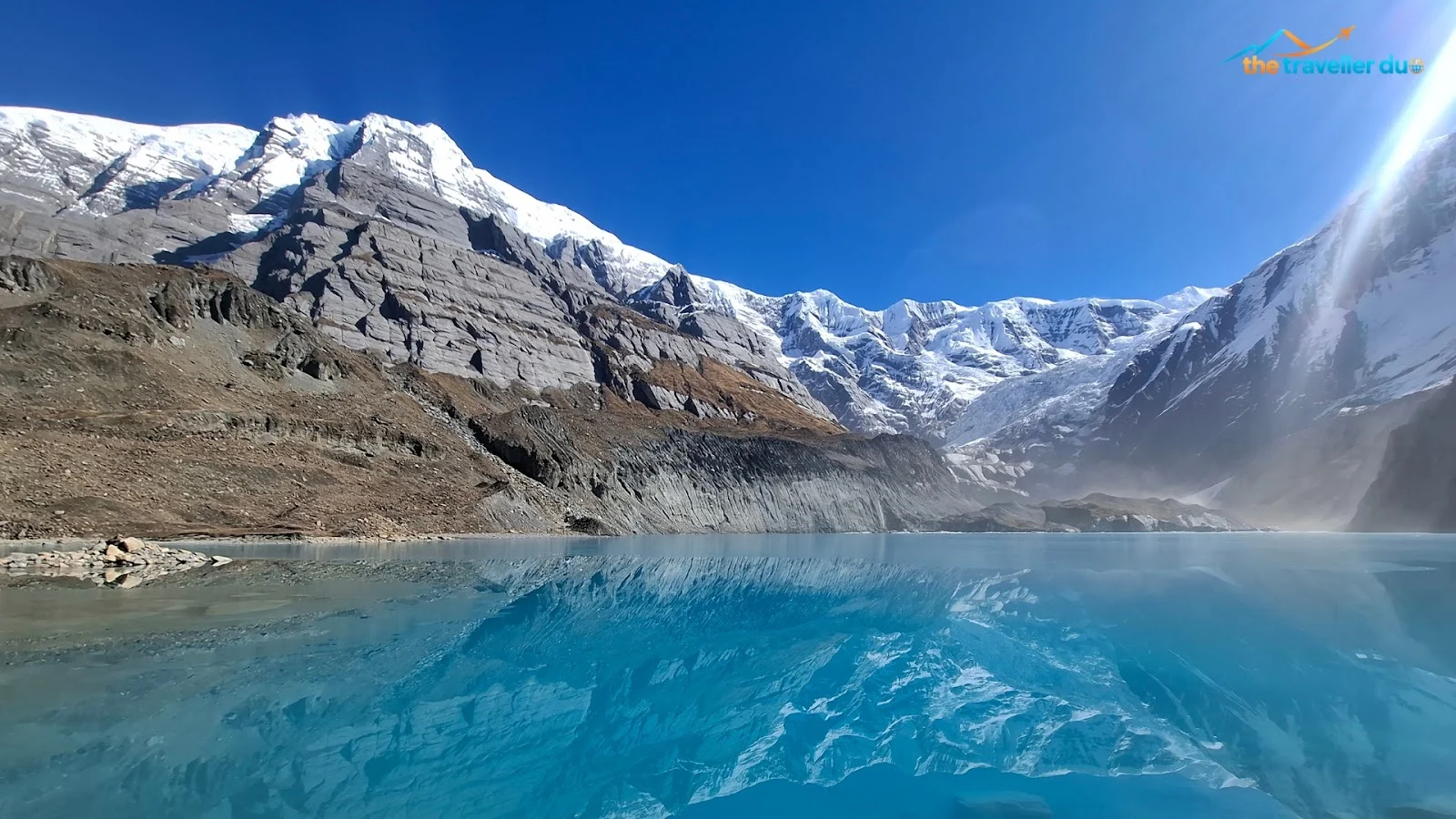
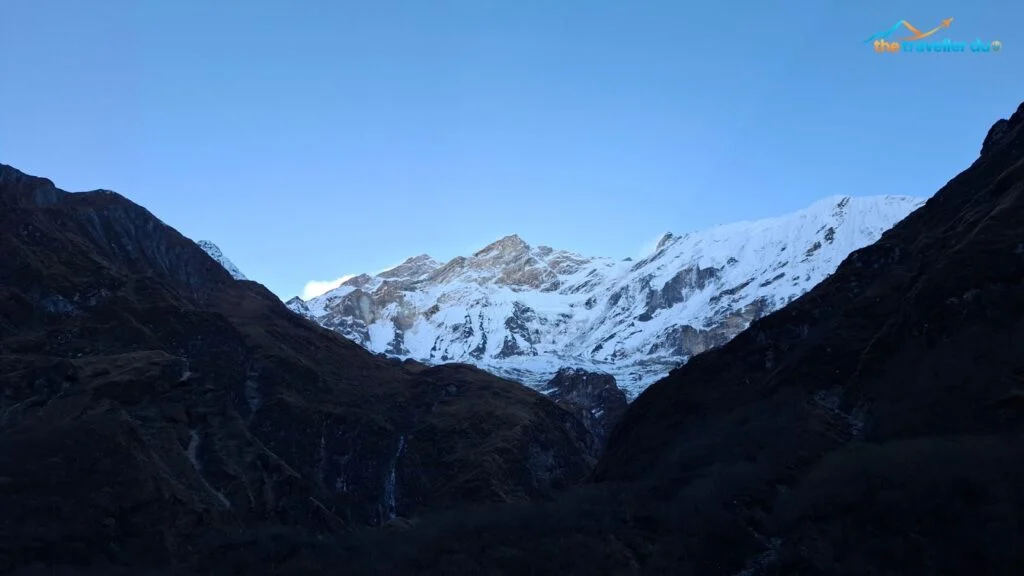
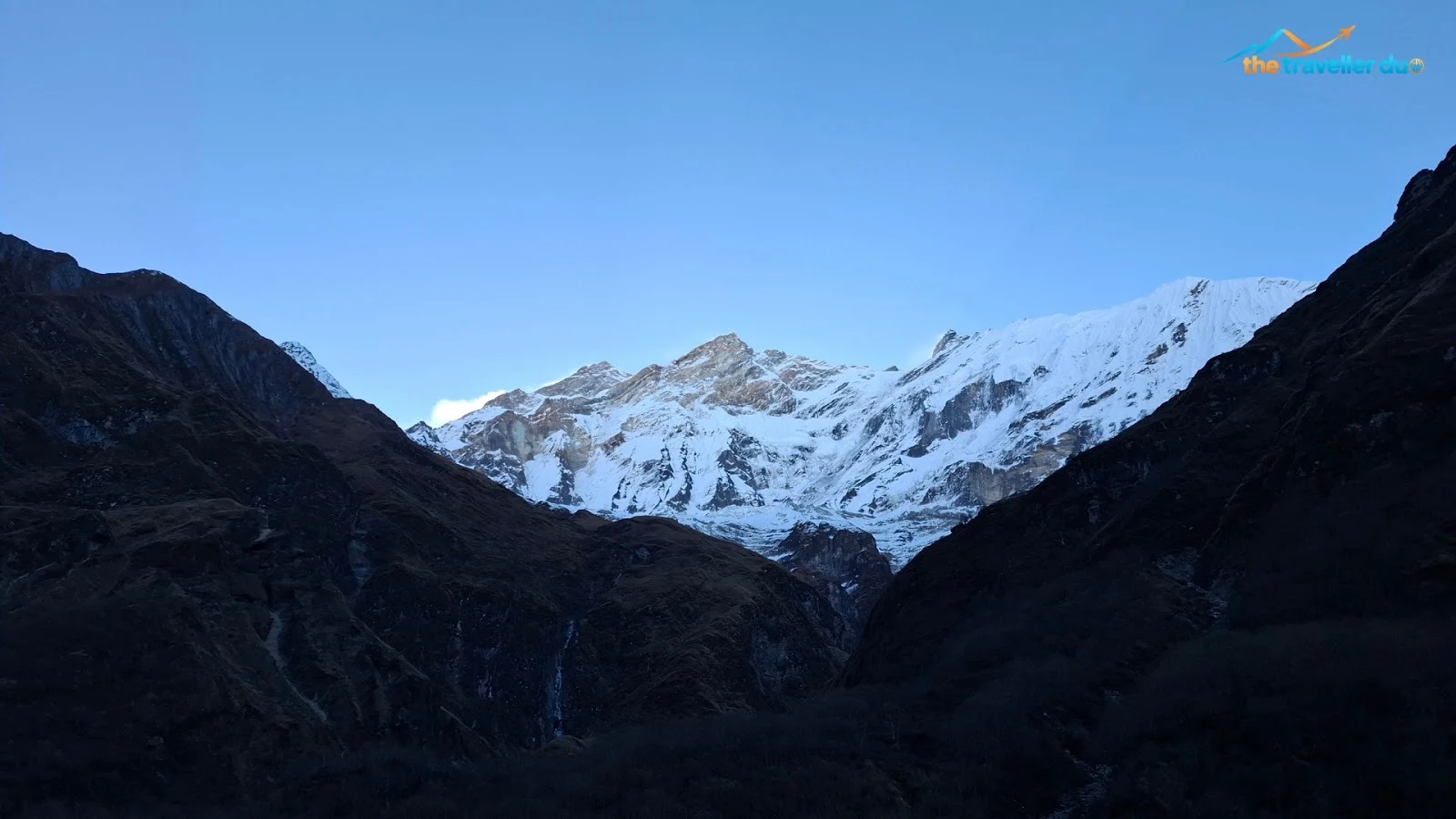
After three hours of climbing in the early morning cold, the trail tops one last rise. Then you see it. Panchakunda Lake lies in a bowl of rock and ice, bright turquoise under the snow walls of Annapurna I.
I reached it at 9 AM on the second day of my North ABC Trek. Sunlight bounced off the snow so hard we squinted. We stayed one full hour. We meditated, took photos and simply breathed. Here is everything you need to plan your own visit.
Panchakunda Lake Quick Facts
| Detail | Information |
|---|---|
| Altitude | About 4,050 m (some sources say 4,100 m) |
| Location | Narchyang, Annapurna Rural Municipality-4, Myagdi district, Gandaki Province |
| Local name | Dikicho, meaning “frozen lake” |
| Water source | Meltwater from the Annapurna and Tilicho glaciers |
| Peaks around it | Annapurna I (8,091 m), Tilicho Peak (7,134 m) and the Nilgiri range |
| Trailhead | Humkhola (about 2,840 m), reached by jeep from Tatopani |
| Walking time | About 1.5 to 2 days up from Humkhola for most trekkers |
| Nearest base camp | North Annapurna Base Camp, about 30 minutes further |
| Best time | October to November, and March to May |
Where Is Panchakunda Lake?
Panchakunda Lake sits at the head of the Mistri Khola valley in Myagdi district, western Nepal. It lies inside the Annapurna Conservation Area, on the Maurice Herzog Trail, which most people call the North ABC Trek.
The lake is the last big stop before North Annapurna Base Camp. Its water drains into the Mistri Khola, which joins the Kali Gandaki further down. That is the same river you follow on the bus ride from Pokhara.
Why Is It Called Panchakunda?
“Pancha” means five and “kunda” means pond or lake. Local belief says the lake splits into five ponds when it freezes and joins into one when the ice melts. Trekking entrepreneur Indra Singh Sherchan has said he saw five clearly separate ponds there in 2003. Today it mostly looks like one single body of water.
The lake is sacred to local people. They link the five ponds to five holy elements. A Shiva temple stands nearby, and a hill called Kagbhusundi is named after a sage connected to the site. Treat the area with respect, just as you would a temple.
A Lake That Is Changing Fast
Panchakunda is one of the clearest signs of how quickly the Himalaya is changing. ICIMOD data cited by The Himalayan Times shows the lake’s mapped area grew from about 0.041 sq km in 2013 to about 0.388 sq km in 2025.
Experts do not fully agree on what that means. Some see a growing glacial lake. Researcher Tej Gurung argues the lake has become deeper rather than wider, and says it should not be called dangerous without proper field studies. What everyone agrees on is that the glaciers around the base camp have thinned a lot. Older guides say the ice near the camp was thick 30 years ago and is now almost gone.
So enjoy the view, but stay off any ice and keep away from loose moraine edges.
How to Reach Panchakunda Lake
You reach Panchakunda on foot from Humkhola. First you need to get to Humkhola:
- Take a bus from Pokhara to Tatopani in Myagdi. Ours left at 6 AM and cost NPR 800 per person.
- Hire a Bolero jeep from Tatopani to Humkhola. It costs about NPR 8,000 for the whole jeep, so share it.
- Walk up the Mistri Khola valley to the lake.
My guide on how to reach Humkhola has the full details on buses, jeeps and the return trip.
The Trail from Humkhola to the Lake
| Section | Typical time |
|---|---|
| Humkhola to Phutphute waterfall | About 2 hours |
| Phutphute to Sandhikharka | 30 to 45 minutes |
| Sandhikharka to Gufaphant (3,319 m) | About 2 hours |
| Gufaphant to Panchakunda Lake via Bhusket Mela (about 3,530 m) | 3 to 5 hours |
Most people sleep at Sandhikharka or Gufaphant, then walk to the lake the next morning. We left Gufaphant at 6 AM and reached the lake at 9 AM. Locals told us to expect about five hours, so do not worry if you are slower.
On the way you pass the stunning Phutphute waterfall. Higher up, painted rocks count down the minutes to Bhusket Mela, a high pasture above the river.
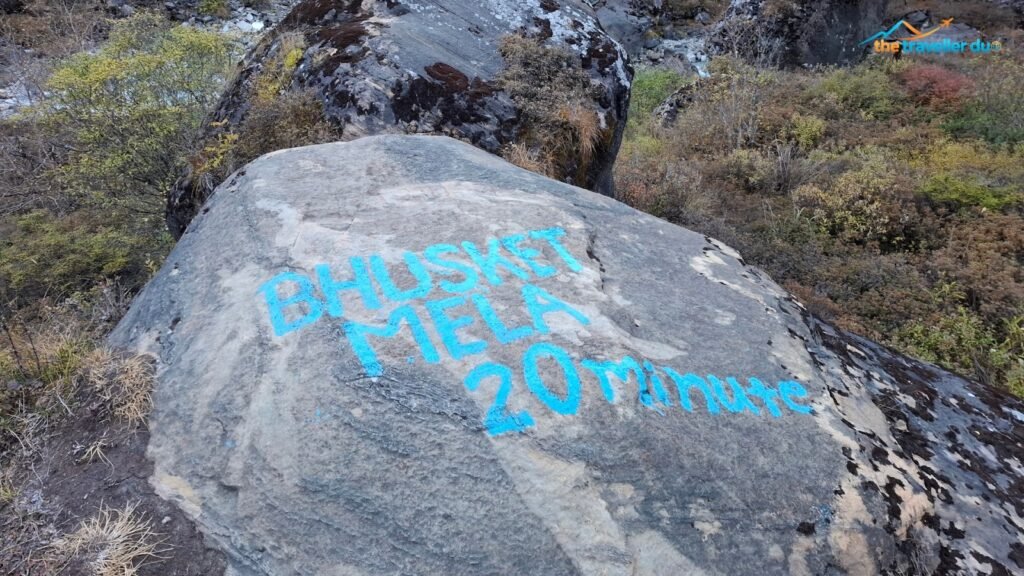
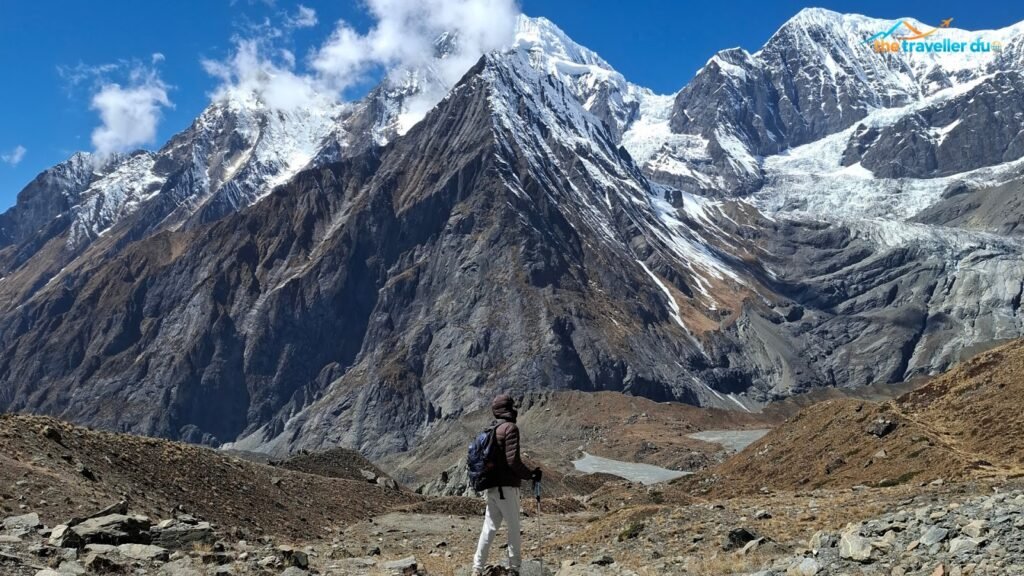
After Bhusket Mela the trees disappear. The trail turns into rock, grass and moraine. The air gets thin, so walk at a steady pace and drink water often.
From Panchakunda Lake to North Annapurna Base Camp
Do not turn back at the lake. North Annapurna Base Camp is only about 30 minutes further. The first base camp sits at about 4,150 to 4,190 m. The old base camp is a bit higher, at about 4,310 m.
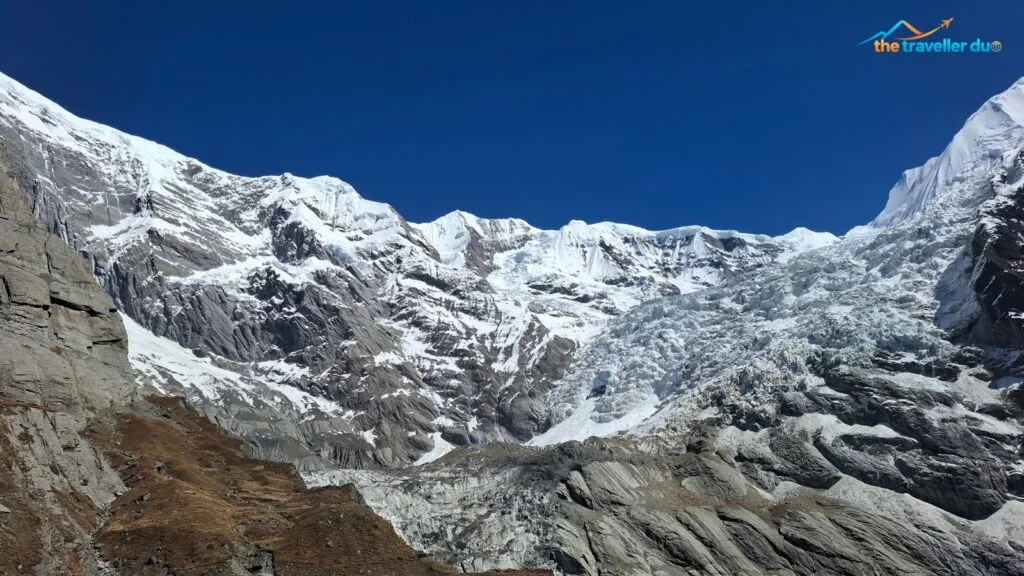
From the old base camp the view opens up into a full circle of ice and snow. The north face of Annapurna I rises straight ahead. Read the full day in my North ABC Trek guide.
Best Time to Visit Panchakunda Lake
- October to November: the clearest skies and the bluest water. By November part of the lake can freeze, which looks amazing but makes the trail icy in the mornings.
- March to May: pleasant days and a busy trail. Spring is when most Nepali trekkers visit.
- June to August: monsoon clouds often hide the peaks, and landslides can block the road to Humkhola.
- December to February: very cold, with snow on the trail. The lake can freeze over.
Try to reach the lake in the morning. The air is calm, the light is clean and the reflections are at their best. Clouds often roll in after midday.
Where to Stay Near Panchakunda Lake
There is a basic tea house near the lake, but it is small and fills quickly in peak season. Most trekkers sleep lower at Bhusket Mela, Gufaphant or Sandhikharka and visit the lake as a morning walk.
We stayed at Gufaphant for NPR 1,800 per person. If you want sunrise at the lake, book the tea house in advance and make sure you feel fine at Bhusket Mela first. See my guide on where to stay on the North ABC Trek for every option.
Tips for Visiting Panchakunda Lake
- Wear sunglasses. The glare off the snow and water is fierce.
- Start early. You get clearer views and more time before the weather turns.
- Respect the altitude. At 4,050 m, headaches and breathlessness are common. Go down if symptoms get worse.
- Respect the lake. It is sacred. Do not swim, wash or throw anything in the water.
- Pack out your trash. There is no waste system up here.
- Layer up. The wind off the ice is cold even on sunny days.
Panchakunda Lake vs Other Lakes in Nepal
Writers often compare Panchakunda to Shey Phoksundo Lake in Dolpo because of its turquoise color. Phoksundo is far bigger and takes much longer to reach. Rara Lake is calmer and surrounded by forest. Panchakunda feels wilder. It sits right under an 8,000-meter peak.
Do not confuse it with Panch Pokhari, a different set of sacred lakes in the east of Nepal.
FAQs About Panchakunda Lake
How high is Panchakunda Lake?
Panchakunda Lake sits at about 4,050 m above sea level. Some sources give 4,100 m.
Where is Panchakunda Lake?
It is in Narchyang, Annapurna Rural Municipality-4, Myagdi district, at the head of the Mistri Khola valley and just below North Annapurna Base Camp.
How long does it take to reach Panchakunda Lake?
Most trekkers take 1.5 to 2 days from Humkhola. From Gufaphant it takes about 3 to 5 hours. We did it in 3.
How far is North Annapurna Base Camp from Panchakunda Lake?
About 30 minutes on foot. The old base camp at about 4,310 m is a little further.
Why is it called Panchakunda?
“Pancha kunda” means five ponds. Local belief says the lake splits into five ponds when it freezes and joins into one when the ice melts.
Can you stay overnight at Panchakunda Lake?
There is a small tea house near the lake, but it fills quickly. Most people sleep at Bhusket Mela or Gufaphant and walk up in the morning.
Do you need a permit to visit Panchakunda Lake?
Yes. The lake is inside the Annapurna Conservation Area, so foreigners need an ACAP permit and must follow current guide rules. Nepali citizens should carry ID.
1 comment