

In this article · 8 sections
- What Accommodation Is Like on the North ABC Trek
- Places to Stay on the North ABC Trek, Stop by Stop
- Which Stop Should You Choose?
- How Much Does a Homestay Cost on the North ABC Trek?
- How to Book a Homestay on the North ABC Trek
- What to Pack for North ABC Homestays
- Homestay Etiquette
- FAQs About Staying on the North ABC Trek
At a glance
- Budget
- NPR 1,800 per person per night (what we paid)
- Max altitude
- Stops from 2,840 m to about 4,050 m
On most famous Nepal treks you can walk into any village and find a lodge with a long menu. The North ABC Trek is not like that yet. Beds are limited, the stops are spread out and in busy weeks they fill up fast.
Where you sleep decides how your trek goes. It decides how far you walk each day, how well you adjust to the altitude and whether you end up sleeping warm or shivering. Here is every place to stay on the trail, what to expect and what we paid.
What Accommodation Is Like on the North ABC Trek
Almost every bed on the trail is in a simple homestay or seasonal tea house run by local families. Think wooden or stone buildings, basic rooms or shared dorms, thick blankets and a shared toilet. Food is usually dal bhat, noodles and tea, cooked fresh over a fire.
The trail is still growing. In spring 2025, a hotelier at Gufaphant told The Kathmandu Post there were at least seven temporary lodging points on the route, each taking about 40 to 50 people. That sounds like a lot until you hear that around 6,000 domestic trekkers walked the trail that season.
So keep your expectations simple. You are paying for a warm meal, a roof and some of the friendliest hosts in Myagdi. You are not paying for hot showers or Wi-Fi.
Places to Stay on the North ABC Trek, Stop by Stop
| Stop | Altitude | From Humkhola | What to expect |
|---|---|---|---|
| Humkhola | About 2,840 m | Trailhead | Basic lodging near the end of the jeep road; useful if you arrive late |
| Sandhikharka | Around 3,200 m | About 2.5 hours | The first homestay on the route; popular first night |
| Gufaphant | 3,319 m | About 4 to 4.5 hours | Where we stayed; warm hosts, bonfire, cold nights |
| Bhusket Mela | About 3,530 m | Between Gufaphant and the lake | High pasture with temporary lodges and tents in season |
| Near Panchakunda Lake | About 4,050 m | 1.5 to 2 days | A small tea house; fills quickly |
| North ABC | About 4,190 m | 30 minutes past the lake | Very limited; mostly tents for expeditions |
Times are typical walking times. We were faster, and you may be slower. That is fine. Altitudes vary between signboards and sources, so treat them as close guides.
Narchyang and Humkhola
Narchyang is the village at the start of the old Maurice Herzog route. Tej Bahadur Gurung, the teacher who first mapped the trail in 2011, now runs a homestay there. Humkhola, higher up the valley, is where the jeep track ends and the walking begins. There is basic lodging here for anyone who arrives late in the day.
Sandhikharka
Sandhikharka is the first homestay on the trail, 30 to 45 minutes above Phutphute waterfall. Many trekkers stop here on their first night, and it is a smart choice if you started walking in the afternoon. The signboard above Humkhola lists phone numbers for the homestay.
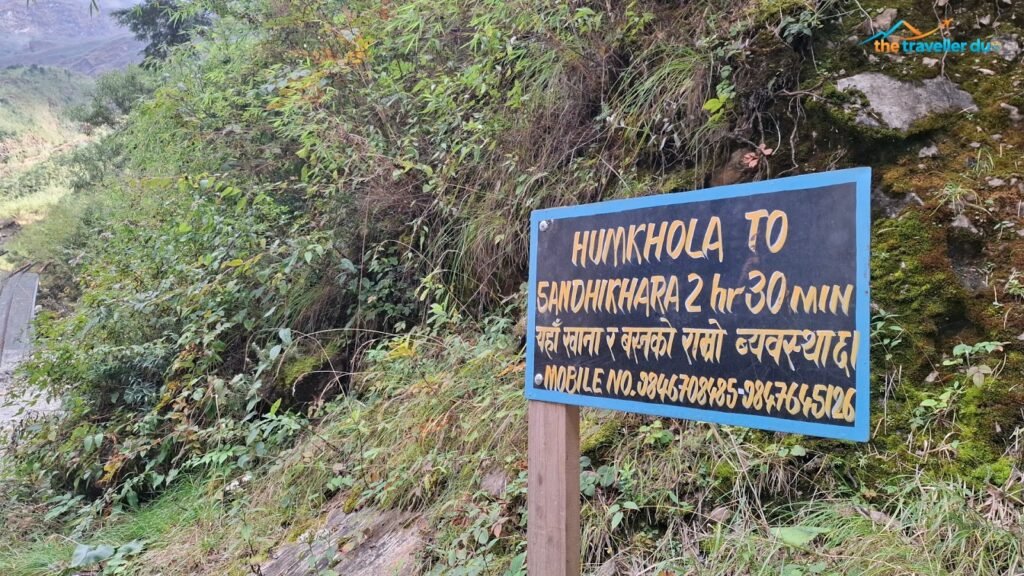
We passed Sandhikharka feeling strong, so we pushed higher. If you are on a 4-day plan, staying here is a good way to break the climb.
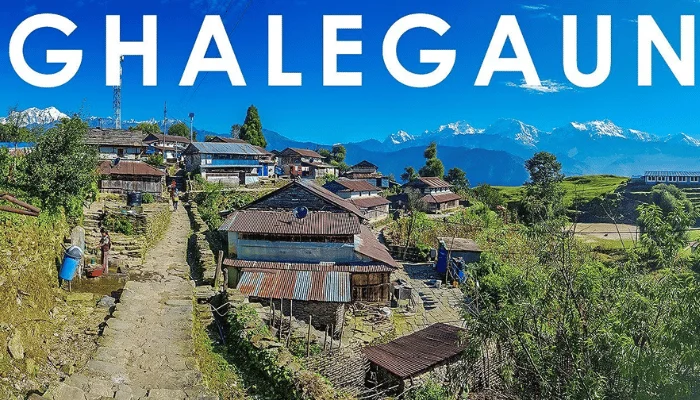
Gufaphant (Ghufaphant)
Gufaphant, at 3,319 m, is where we spent our one night on the trail. We reached it around 6:30 PM after starting from Humkhola at 3:30 PM.
We paid NPR 1,800 per person. For most trekkers this is fair value. The staff were warm and friendly. We had veg khana and hot tea. A bonfire kept us cozy. Nights here sit around 1 to 4 degrees Celsius, so pack warm layers.
From Gufaphant, Panchakunda Lake took us 3 hours the next morning. Locals usually say about 5 hours. That makes Gufaphant a good base for a fast trip.
Bhusket Mela
Bhusket Mela is a high pasture beside the Mistri Khola at about 3,530 m. The 1950 French expedition crossed this ridge on its way to the base camp. Today, temporary lodges and tents set up here during the trekking season.
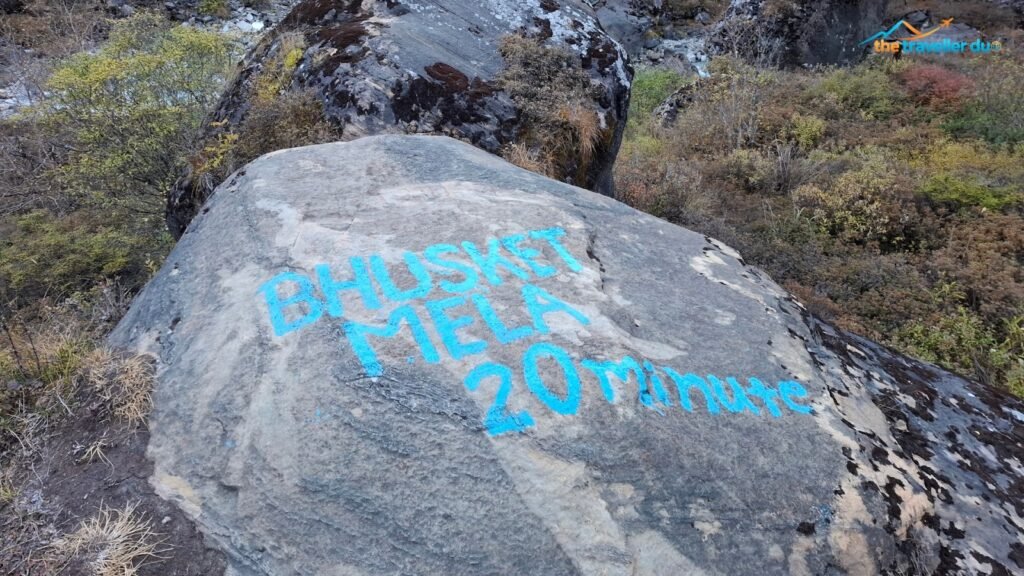
Sleeping at Bhusket Mela makes the last push to the lake much shorter. It is a good second night on a 4-day plan, but only if you feel well. It is high, cold and exposed.
Near Panchakunda Lake and the Base Camp
There is a small tea house near Panchakunda Lake. It is the only way to see sunrise at the lake, but it is very basic and fills quickly. The base camp itself has almost no beds for trekkers. During one busy November, The Annapurna Express reported tired trekkers forced to spend the night outside in freezing cold. Do not plan to sleep up here unless you have booked or carry a tent.
Which Stop Should You Choose?
- Fast 2-day trip: sleep at Gufaphant, then walk to the lake and base camp and back down to Humkhola. This is what we did.
- Comfortable 4-day trip: night 1 at Sandhikharka, night 2 at Bhusket Mela or Gufaphant, night 3 back at Gufaphant after visiting the lake.
- Sunrise at the lake: add a night at the tea house near Panchakunda, but only after you have spent a night above 3,300 m without symptoms.
You can find full day-by-day plans in my North ABC Trek guide.
How Much Does a Homestay Cost on the North ABC Trek?
We paid NPR 1,800 per person at Gufaphant. Use that as your starting point, and expect:
- Higher prices as you go higher, because everything is carried up on foot.
- Higher prices in peak spring weeks and festival holidays.
- Extra charges for snacks, soft drinks and sometimes phone charging.
- Cash only. Carry enough Nepali rupees from Pokhara or Beni.
How to Book a Homestay on the North ABC Trek
There is no online booking for most places. Here is what works:
- Call ahead. Signboards on the trail, like the one above Humkhola, list homestay phone numbers. Note them down.
- Ask your jeep driver. Drivers on the Tatopani to Humkhola route usually know who has space.
- Start walking early. The earlier you arrive, the better your chance of a bed.
- Avoid peak dates if you can. Spring weekends and the Dashain and Tihar holidays are the busiest.
What to Pack for North ABC Homestays
- A warm sleeping bag, even if blankets are provided
- A headlamp, because power can be limited
- A power bank for your phone and camera
- Warm socks and light camp shoes for the evenings
- Toilet paper and hand sanitizer
- A water purifier or tablets
- Cash in small notes
Homestay Etiquette
These homes are run by local families who carry most of their supplies up the trail. A little effort goes a long way:
- Eat where you sleep. That is how most homestays earn their living.
- Order together when you can. It saves fuel and time in the kitchen.
- Take your trash back down with you.
- Ask before taking photos of people.
- Say thank you. Dhanyabad goes a long way.
FAQs About Staying on the North ABC Trek
Are there homestays on the North ABC Trek?
Yes. There are homestays and seasonal tea houses at Sandhikharka, Gufaphant and Bhusket Mela, plus a small tea house near Panchakunda Lake and basic lodging at Humkhola.
How much does a homestay cost on the North ABC Trek?
We paid NPR 1,800 per person for a night at Gufaphant. Expect prices to rise with altitude and in peak season.
Can I stay overnight at North Annapurna Base Camp?
There are almost no beds for trekkers at the base camp. Most people sleep at Gufaphant or Bhusket Mela and visit the base camp as a day walk.
Do I need to book homestays in advance?
In spring and during festival holidays, yes. Call ahead using the numbers on trail signboards, or ask your jeep driver.
Do I need a sleeping bag on the North ABC Trek?
Yes. Nights are cold, around 1 to 4 °C at Gufaphant, and you may end up in a tent or dorm in busy weeks.
Is there Wi-Fi or phone signal on the trail?
Do not count on it. Coverage is patchy and changes from season to season. Tell someone your plan before you start.
1 comment