
In this article · 16 sections
- Mardi Himal Trek at a Glance
- Why Do the Mardi Himal Trek?
- Mardi Himal Trek Route Options
- Mardi Himal Trek Altitudes and Walking Times
- Mardi Himal Trek Itinerary: 3, 4 and 5-Day Plans
- Mardi Himal Upper Viewpoint and Base Camp
- Mardi Himal Trek Cost
- Mardi Himal Trek Permits
- Best Time for the Mardi Himal Trek
- How Difficult Is the Mardi Himal Trek?
- Where to Stay: Mardi Himal Teahouses
- Mardi Himal Trek Packing List
- Tips for the Mardi Himal Trek
- Mardi Himal vs Poon Hill vs Annapurna Base Camp
- Final Thoughts on the Mardi Himal Trek
- Mardi Himal Trek FAQs
At a glance
- Best time to visit
- October–November and March–April
- Budget
- NPR 3,000–5,000 per person per day on the trail
- Duration
- 3–5 days from Pokhara
- Difficulty
- Moderate
- Max altitude
- 4,200 m (Upper Viewpoint); 4,500 m (Base Camp)
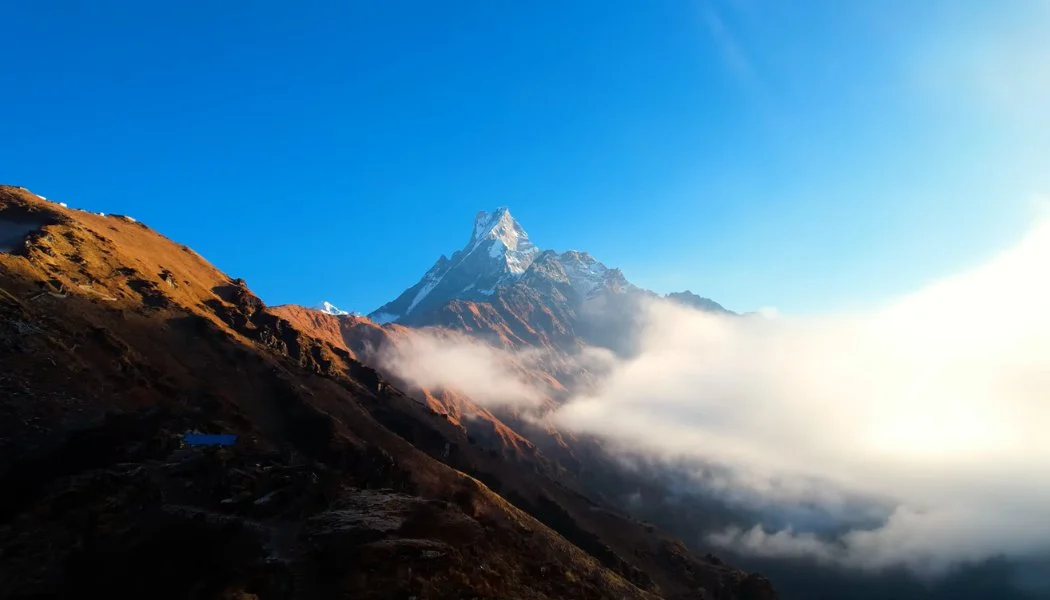
Imagine waking up at 4 AM at High Camp, climbing a narrow grassy ridge by headlamp and watching the sun hit Machhapuchhre so close it feels like you could touch it. That is the Mardi Himal Trek, and it is one of the best short treks in Nepal.
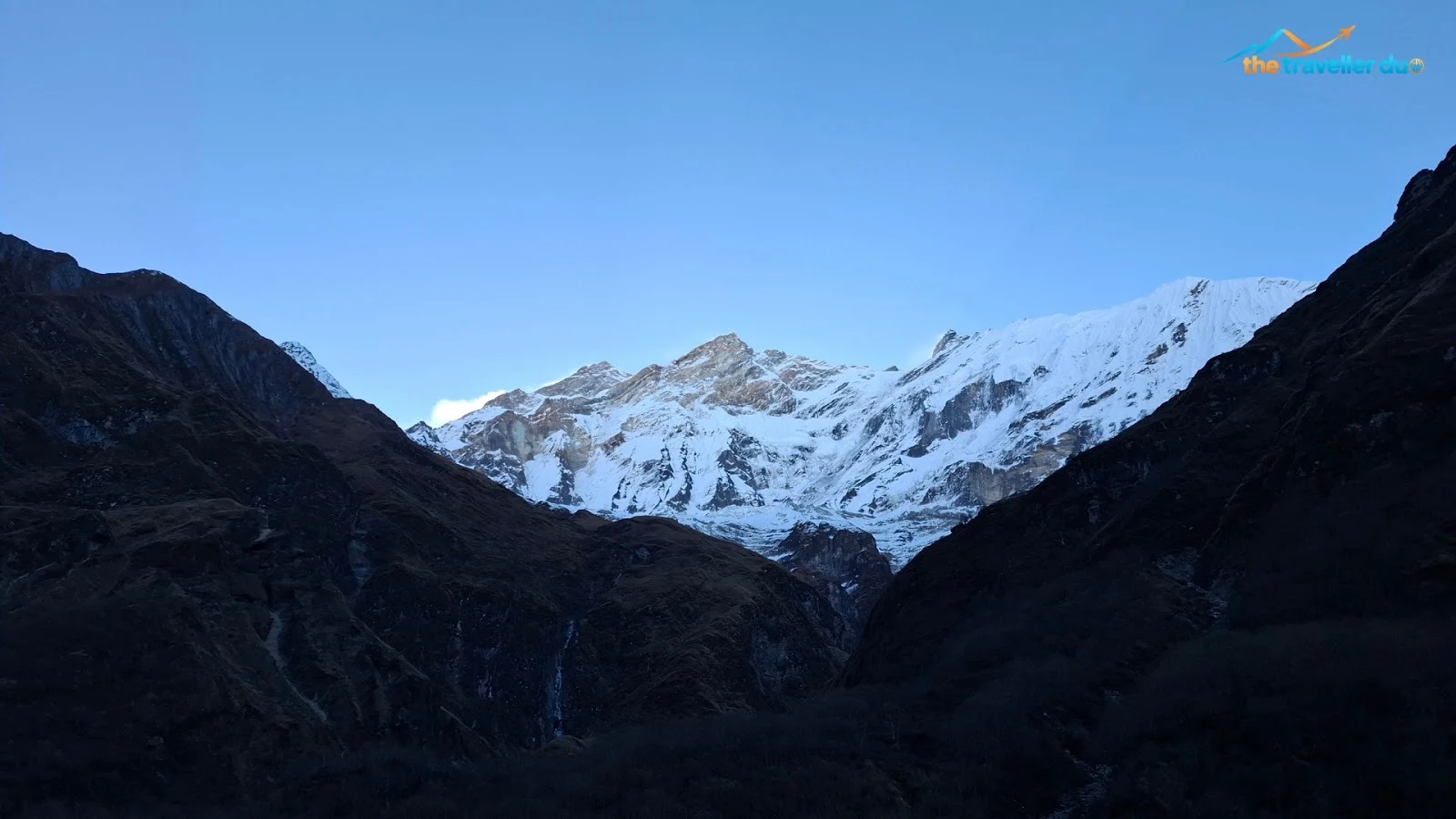
The trail starts just an hour from Pokhara. In 3 to 5 days it takes you from rice terraces and rhododendron forest to the Mardi Himal Upper Viewpoint at about 4,200 m, face to face with Machhapuchhre, Annapurna South and Hiunchuli. This guide covers everything you need to plan it: itineraries, routes, altitudes, costs, permits, the best season and the mistakes to avoid.
Mardi Himal Trek at a Glance
| Detail | Information |
|---|---|
| Region | Annapurna Conservation Area, Kaski district, near Pokhara |
| Start point | Kande or Phedi/Dhampus, 45 minutes to 1.5 hours by road from Pokhara |
| End point | Siding (then jeep to Pokhara), or back the way you came |
| Highest point | Upper Viewpoint about 4,200 m; Mardi Himal Base Camp about 4,500 m |
| Highest overnight | High Camp, about 3,580 m |
| Duration | 3 to 5 days from Pokhara (4 days is the sweet spot) |
| Total distance | Roughly 40 to 55 km, depending on route |
| Difficulty | Moderate; no technical sections, but steep climbs and descents |
| Accommodation | Teahouses all the way |
| Permits | ACAP permit; foreigners also need a TIMS card and a licensed guide |
| Best time | October to November, and March to April |
| Daily budget | About NPR 3,000 to 5,000 per person on the trail |
Why Do the Mardi Himal Trek?
Mardi Himal is a small 5,587 m peak tucked under the south face of Machhapuchhre (6,993 m). The trail to it follows a long forested ridge that was only opened to trekkers in 2012. It is newer and quieter than Poon Hill or Annapurna Base Camp, but much easier to reach.
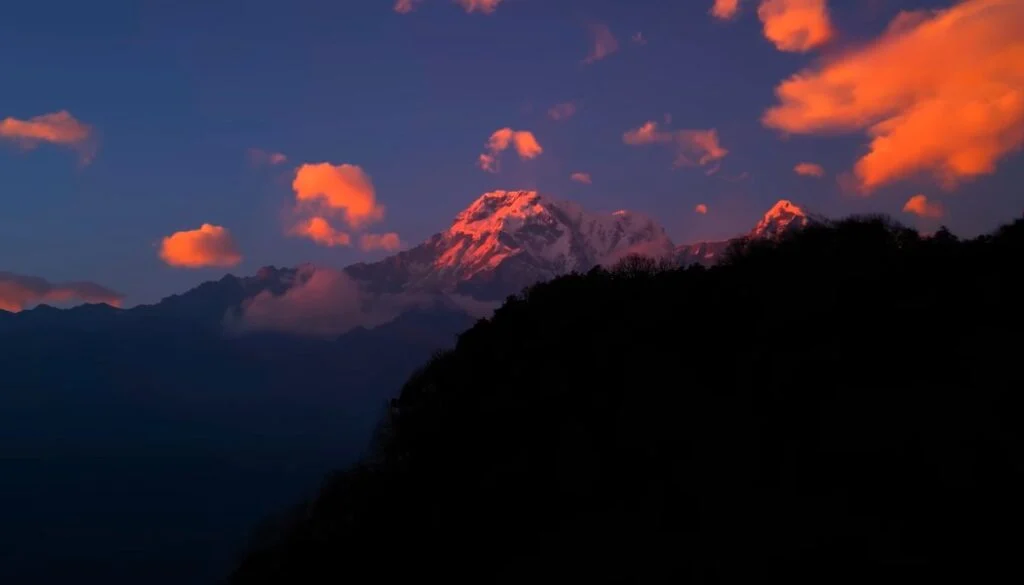
Here is why so many people love it:
- Huge views for a short trek. You get close-up views of Machhapuchhre, Annapurna South, Hiunchuli and Mardi Himal in just 2 to 3 days of walking.
- Close to Pokhara. You can be on the trail an hour after breakfast at Lakeside.
- Beautiful forest. The walk between Forest Camp and Low Camp passes through moss-covered rhododendron forest that blazes red and pink in spring.
- Teahouses all the way. No tents or cooking gear needed.
- Flexible. There are several start and end points, so you can fit it into 3, 4 or 5 days.
Mardi Himal Trek Route Options
There are three common ways to start and two common ways to finish.
Starting Points
- Kande (about 1,770 m): the most popular start. A short climb takes you to Australian Camp, then on to Pothana and Pitam Deurali. Easy to reach by taxi, jeep or local bus from Pokhara.
- Phedi and Dhampus (about 1,650 m): a gentler start through the Gurung village of Dhampus. It joins the Kande trail at Pothana.
- Lwang village: a quieter start through a tea-growing village, joining the main trail near Forest Camp via Kalimati. Good if you want to avoid the busier ridge.
Ending Points
- Siding: the most common way down. From High Camp or Low Camp a long, steep path drops to Siding village, where jeeps wait to take trekkers back to Pokhara. It is quick but hard on the knees and loose in places.
- Back the way you came: retrace your steps through Forest Camp to Kande or Dhampus. Longer, but easier underfoot and with more of the same lovely forest.
Mardi Himal Trek Altitudes and Walking Times
| Section | Altitude at the end | Typical walking time |
|---|---|---|
| Kande to Australian Camp | About 2,060 m | 1 to 1.5 hours |
| Australian Camp to Pitam Deurali via Pothana | About 2,100 m | 2 to 2.5 hours |
| Pitam Deurali to Forest Camp | About 2,550 m | 2.5 to 3 hours |
| Forest Camp to Low Camp | About 3,000 m | 3 to 4 hours |
| Low Camp to High Camp via Badal Danda (3,210 m) | About 3,580 m | 3 to 4 hours |
| High Camp to Upper Viewpoint | About 4,200 m | 2 to 3 hours |
| Upper Viewpoint to Mardi Himal Base Camp | About 4,500 m | 1.5 to 2 hours more |
| High Camp to Siding | About 1,750 m | 5 to 6 hours downhill |
Altitudes differ a little between maps, signboards and guidebooks, so treat these as close estimates.
Mardi Himal Trek Itinerary: 3, 4 and 5-Day Plans
4-Day Mardi Himal Itinerary (Recommended)
This is the best balance of time, effort and acclimatization for most people.
| Day | Route | Walking time | Sleep at |
|---|---|---|---|
| Day 1 | Drive Pokhara to Kande, trek via Australian Camp and Pothana to Forest Camp | 6 to 7 hours | Forest Camp (2,550 m) |
| Day 2 | Forest Camp to Low Camp and on to High Camp | 6 to 7 hours | High Camp (3,580 m) |
| Day 3 | Pre-dawn hike to Upper Viewpoint, back to High Camp, descend to Low Camp | 7 to 8 hours | Low Camp (3,000 m) |
| Day 4 | Low Camp to Siding, jeep to Pokhara | 4 to 5 hours + drive | Pokhara |
Day 1: Pokhara to Forest Camp. Take a taxi or jeep to Kande (about 1 hour). The trail climbs steadily to Australian Camp, a grassy ridge with your first big view of the Annapurnas. From Pothana you enter the conservation area and the forest gets thicker. The last stretch to Forest Camp is a long, gentle climb under oak and rhododendron.

Day 2: Forest Camp to High Camp. The forest above Forest Camp is the most beautiful part of the trek: twisted trees, hanging moss and birdsong. You pop out of the trees at Low Camp, where Machhapuchhre suddenly fills the sky. After lunch, climb the open ridge past Badal Danda to High Camp. If you feel any altitude symptoms, stop at Low Camp instead.

Day 3: Upper Viewpoint and down to Low Camp. Start at about 4 or 5 AM with a headlamp. The trail climbs a narrow grassy ridge to the Upper Viewpoint. At sunrise the light moves across Mardi Himal, Machhapuchhre, Annapurna South, Hiunchuli and the distant Annapurna I. Return to High Camp for breakfast, then descend to Low Camp for a well-earned rest.
Day 4: Low Camp to Siding and Pokhara. Take the steep trail down to Siding village. From there, jeeps run the rough road back to Pokhara. You will be by the lake for a late lunch.
3-Day Mardi Himal Itinerary (Fast)
Only for fit trekkers who are used to long days.
| Day | Route | Sleep at |
|---|---|---|
| Day 1 | Pokhara to Kande by road, trek to Forest Camp | Forest Camp |
| Day 2 | Forest Camp to High Camp | High Camp |
| Day 3 | Upper Viewpoint at sunrise, back to High Camp, descend to Siding, jeep to Pokhara | Pokhara |
Day 3 is very long, with about 2,400 m of descent. Your knees will feel it. Use trekking poles.
5-Day Mardi Himal Itinerary (Relaxed, with Base Camp)
Best for beginners, families, photographers and anyone who wants to reach Mardi Himal Base Camp.
| Day | Route | Sleep at |
|---|---|---|
| Day 1 | Pokhara to Kande or Dhampus, trek to Pothana or Pitam Deurali | Pitam Deurali (2,100 m) |
| Day 2 | Pitam Deurali to Forest Camp and Low Camp | Low Camp (3,000 m) |
| Day 3 | Low Camp to High Camp, short day for acclimatization | High Camp (3,580 m) |
| Day 4 | Upper Viewpoint at sunrise, continue to Mardi Himal Base Camp, back to High Camp | High Camp |
| Day 5 | High Camp to Siding, jeep to Pokhara | Pokhara |
Mardi Himal Base Camp sits below the glaciers at about 4,500 m. Only continue past the viewpoint in good weather and with an early start. Turn back if clouds roll in.
Mardi Himal Upper Viewpoint and Base Camp
The Upper Viewpoint is the highlight of the whole trek. It sits on the ridge at about 4,200 m (some signs say 4,250 m). Most trekkers turn around here.
From the viewpoint, a fainter trail continues for 1.5 to 2 hours to Mardi Himal Base Camp at about 4,500 m. The views of the Mardi Himal glacier are dramatic, but the trail is exposed and there are no facilities. Carry water, snacks and warm layers, and only go with a clear forecast. In winter and early spring, snow often makes this section unsafe.
Mardi Himal Trek Cost
Here is a realistic budget for an independent trekker. Prices rise as you go higher, and they change every season, so use these as estimates.
| Expense | Approximate cost |
|---|---|
| Room in a teahouse | NPR 500 to 1,500 per night (more at High Camp) |
| Dal bhat | NPR 500 to 1,000 depending on altitude |
| Breakfast | NPR 400 to 800 |
| Tea or coffee | NPR 100 to 300 per cup |
| Phone charging, hot shower, Wi-Fi | NPR 100 to 500 each, where available |
| Daily total for room and meals | About NPR 3,000 to 5,000 per person |
| Pokhara to Kande by taxi or jeep | About NPR 2,000 to 3,500 per vehicle |
| Siding to Pokhara by jeep | Agree the price with the driver before you leave |
For reference, a 2021 trip report listed NPR 700 for a room, NPR 630 for veg dal bhat, NPR 200 for phone charging and NPR 500 for a hot bucket shower at High Camp. Prices have gone up since then.
Guides and porters: expect roughly USD 25 to 35 a day for a licensed guide and USD 20 to 25 for a porter, plus their food and lodging and a tip at the end.
Ways to Save Money
- Eat dal bhat. Refills are usually free, and it keeps you full for hours.
- Carry a water purifier or tablets instead of buying bottled water.
- Bring snacks from Pokhara.
- Share taxis and jeeps with other trekkers.
- Carry enough cash. There are no ATMs on the trail.
Mardi Himal Trek Permits
The trek lies inside the Annapurna Conservation Area, so you need:
- ACAP permit: NPR 3,000 for foreigners, NPR 1,000 for SAARC nationals. Nepali citizens do not pay the fee but should carry ID.
- TIMS card: NPR 2,000 for foreign trekkers, issued through a registered trekking agency.
- Licensed guide: since April 2023, foreign trekkers must trek with a licensed guide in Nepal’s protected areas. Nepali citizens can trek on their own.
You can get permits at the Nepal Tourism Board office in Kathmandu or the Tourist Service Centre in Pokhara. Agencies can arrange everything for you. Permits are checked at checkpoints along the trail, so keep them handy. Rules change from time to time, so confirm before you go.
Best Time for the Mardi Himal Trek
| Season | Months | What to expect |
|---|---|---|
| Autumn | October to November | Clearest skies, best views, busiest season |
| Spring | March to April | Rhododendron blooms, warmer days, some afternoon haze |
| Winter | December to February | Cold nights, snow above High Camp, very quiet trails |
| Monsoon | June to September | Rain, clouds, leeches and slippery trails |
Autumn is the classic choice. After the monsoon rains, the air is clean and the mountains are sharp. Nights at High Camp drop below freezing by November.
Spring is the most colorful season. The rhododendron forest between Forest Camp and Low Camp turns red, pink and white in late March and April.
Winter is possible and rewarding if you are prepared. Expect snow and ice on the ridge, and the trail beyond High Camp can be closed after heavy snowfall.
Monsoon is the hardest time. Views are rare, leeches are everywhere in the forest and the Siding road can be blocked.

How Difficult Is the Mardi Himal Trek?
The Mardi Himal Trek is graded moderate. There are no technical sections, and fit beginners do it every season. But it is not a stroll.
- Steep climbs: the walk from Low Camp to High Camp and the pre-dawn climb to the viewpoint are steep and tiring.
- Fast altitude gain: you go from about 1,770 m to 4,200 m in just 2 to 3 days. Headaches at High Camp are common.
- Brutal descent: the path from High Camp to Siding drops about 1,800 m and is hard on the knees.
- Cold and wind: the ridge above Low Camp is exposed. Weather can turn quickly in the afternoon.
Altitude Sickness on Mardi Himal
Watch for headache, nausea, dizziness, loss of appetite and trouble sleeping. Walk slowly, drink plenty of water and avoid alcohol. If symptoms get worse, go down. Even a few hundred meters helps. If you are worried about altitude, choose the 5-day itinerary and sleep at Low Camp before going to High Camp. Ask your doctor about altitude medicine before you travel.
Where to Stay: Mardi Himal Teahouses
Every stop on the trail has teahouses run by local families. Rooms are simple, usually twin beds with blankets, and toilets are shared. Most lodges have a warm dining room with a stove, and the food menu is surprisingly long.
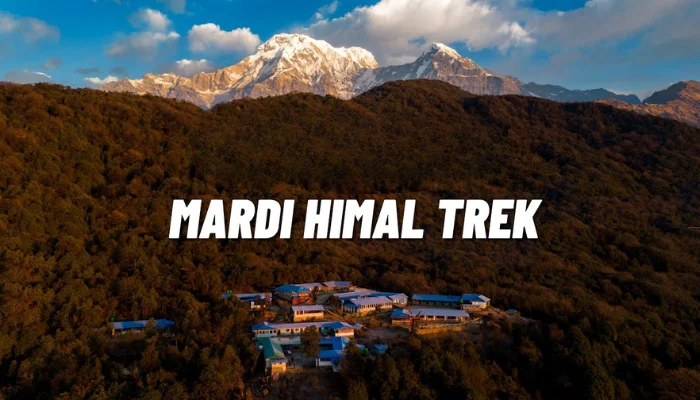
| Stop | Altitude | What to expect |
|---|---|---|
| Australian Camp and Pothana | About 1,900 to 2,060 m | Comfortable lodges, good views, easy first night |
| Pitam Deurali | About 2,100 m | Small cluster of lodges at the forest edge |
| Forest Camp | About 2,550 m | Several lodges in a clearing in the forest |
| Low Camp | About 3,000 m | First big mountain views; good place to acclimatize |
| Badal Danda | About 3,210 m | A few lodges on the ridge; quieter than High Camp |
| High Camp | About 3,580 m | Over a dozen teahouses; busiest and coldest stop |
In peak October and April weeks, High Camp can fill up. Start early so you arrive by early afternoon, or ask your guide to call ahead. Electricity is available in most lodges, but charging usually costs extra. Mobile data works in many places, though not everywhere.
Mardi Himal Trek Packing List
Pack light. You will carry everything up steep steps.
- Down jacket, fleece and thermal base layers
- Waterproof jacket
- Warm hat, gloves and a buff
- Trekking boots that are already broken in
- Trekking poles, especially for the Siding descent
- Headlamp for the pre-dawn viewpoint hike
- Sleeping bag or liner (rated to about -10 °C in winter)
- Sunglasses and sunscreen
- Water bottle and purifier or tablets
- Power bank
- Snacks, cash in small notes and a basic first aid kit
- Microspikes from December to March
Tips for the Mardi Himal Trek
- Do not rush the first night at altitude. Sleeping at Low Camp before High Camp makes the viewpoint hike much easier.
- Start the viewpoint hike early. Clouds often build by mid-morning.
- Check the weather at High Camp. If it is snowing or very windy, wait a day or skip the base camp extension.
- Book your return jeep. Ask your lodge at Low Camp or High Camp to arrange a jeep from Siding.
- Respect the trail. Carry out your plastic and use the toilets at teahouses.
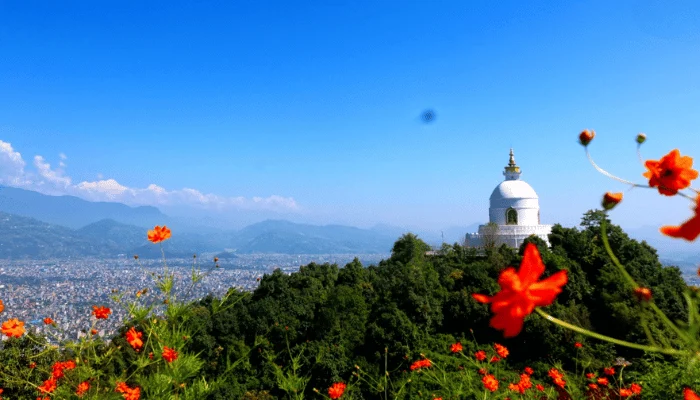
- Add a day in Pokhara. It gives you a buffer for bad weather. Use it to visit spots like Pumdikot Hill or the Boudha Stupa in Pokhara.
Mardi Himal vs Poon Hill vs Annapurna Base Camp
| Mardi Himal | Poon Hill | Annapurna Base Camp | |
|---|---|---|---|
| Days from Pokhara | 3 to 5 | 3 to 4 | 6 to 10 |
| Highest point | About 4,200 m | 3,210 m | 4,130 m |
| Difficulty | Moderate | Easy to moderate | Moderate |
| Crowds | Medium | High | High |
| Best for | Close-up Machhapuchhre views on a short trip | First-time trekkers and sunrise lovers | The full Annapurna Sanctuary experience |
Want something wilder on the other side of the Annapurna massif? Read my North ABC Trek guide and North ABC vs ABC comparison.
Final Thoughts on the Mardi Himal Trek
If you have only a few days in Pokhara and want real Himalayan views, the Mardi Himal Trek is hard to beat. It packs forest, ridgelines and a sunrise view of Machhapuchhre into a trip that fits in a long weekend.

Give yourself 4 days, start the viewpoint hike in the dark, and pack for the cold. The mountains will do the rest. Looking for your next trek after this? Try the Langtang Valley trek or the Gokyo Valley trek.
Mardi Himal Trek FAQs
How many days do you need for the Mardi Himal Trek?
Most people take 4 days from Pokhara. Fit trekkers can do it in 3 days, and a relaxed 5-day plan lets you add Mardi Himal Base Camp and acclimatize better.
How high is the Mardi Himal Trek?
The Upper Viewpoint is at about 4,200 m and Mardi Himal Base Camp is at about 4,500 m. The highest place you sleep is High Camp at about 3,580 m.
Is the Mardi Himal Trek difficult?
It is a moderate trek with no technical sections. The hardest parts are the steep climb to High Camp, the pre-dawn climb to the viewpoint and the long descent to Siding.
How much does the Mardi Himal Trek cost?
Budget about NPR 3,000 to 5,000 per person per day for teahouse rooms and meals, plus transport, permits and, for foreigners, a licensed guide.
Do I need a permit for the Mardi Himal Trek?
Yes. You need an ACAP permit. Foreign trekkers also need a TIMS card and must hire a licensed guide. Nepali citizens only need to carry ID.
Can I do the Mardi Himal Trek without a guide?
Nepali citizens can. Since April 2023, foreign trekkers must go with a licensed guide in Nepal’s protected areas, including the Annapurna region.
What is the best time for the Mardi Himal Trek?
October to November gives the clearest views. March to April brings rhododendron blooms. Avoid the monsoon from June to September.
Where does the Mardi Himal Trek start and end?
Most people start at Kande or Phedi/Dhampus near Pokhara and finish at Siding, where jeeps run back to Pokhara. You can also return the way you came.
Can beginners do the Mardi Himal Trek?
Yes. Fit beginners do it every season. Choose the 4 or 5-day itinerary, walk slowly and take altitude symptoms seriously.
Is there Wi-Fi and electricity on the Mardi Himal Trek?
Most teahouses have electricity, and many have mobile data or paid Wi-Fi, but coverage is patchy higher up. Charging usually costs extra.