In this article · 7 sections
The mystical land of Gwallek Dham situated in the Far Western region of Nepal is considered a sacred abode of Lord Shiva. This holy site, enveloped in ancient lore and vibrant culture, draws devotees from far and wide seeking to experience its divine energy.

An Overview of Gwallek
The Far Western Province of Nepal, under the Manaskhand region, is believed to be a special sacred land of Lord Shiva. Several legends and folklore point to Shiva’s presence in this area through holy pilgrimage sites connected to Him. According to local beliefs documented in ancient scriptures, Shiva is regarded as the creator, sustainer and destroyer of this land.
.png)
Nestled amidst the scenic hills and valleys of the holiest site, Manaskhand, lies the serene Gwalek Dham. Considered the center of faith and spirituality, Gwallek Dham is believed to exude a unique supernatural aura. The local society here is steeped in Sanatan Dharma traditions, always seeking ‘Satyam Shivam Sundaram’ – the eternal truth and the divine grace of Lord Shiva.
Gwallek Kedar is one of the mystical avatars of Mahadev worshipped extensively in this region. Scholars trace its origins to the famous Shiva temple ‘Khandeukedar’ mentioned in Hindu scriptures as ‘Kalanjar Mountain’. The Katyuri dynasty ruled this area until the 13-14th century, with Gwallek Dham being their main pilgrimage site. The resident panda priests here were Katyuri Brahmins. The name ‘Gwallek Dham’ emerged in the 14-15th century. Some accounts also suggest the revered Hindu philosopher Adi Shankaracharya visited this site, confirming its link to Kalanjar Mountain of Shiva Purana.
Location and Significance
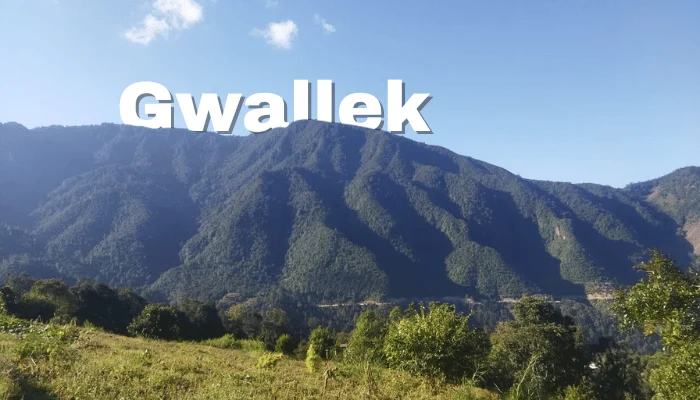
Geographically, Gwalek Dham lies surrounded by the hills of Lower Swarad, Mallo Swarad and Passai Garkha in Baitadi district. Three triangular peaks forming a ‘Trishul’ dominate its landscape. The middle bare rocky peak is smaller in size compared to the other two lush green peaks.
.png)
Baitadi district ranges from 1,000 – 2,800 meters in altitude. Gwallek peak itself is approximately 2,700 meters high. For pilgrims, the site is just 10 km from the Baitadi headquarters. The local Dehimandau market to the east forms the main entry point, providing access along both eastern and western routes. With new roads like Dehimandaum-Giregada and Patan-Melauli, the journey to Gwallek Dham is getting easier. Plans for a Gwallek Dham Ring Road are also underway.
The religious peak is surrounded by dense forests spanning 2,788 hectares with rich biodiversity. Several wards of Dashrathchand, Melauli and Pancheshwar municipalities fall within this protected zone.
Spiritually, Gwallek Dham is one of the ‘sattvik’ forms of Shiva, alongside Badrinath in Uttarakhand, and Raula, Thal, Dhaj, Kamal, Thagil in Far Western Nepal. It is the oldest deity of the region, with even newer gods acknowledging its supreme status. The entire region around it is believed to be under Kedar’s jurisdiction.
Legend Behind the Name
The original name of Gwallek Dham varies across ancient Hindu texts. Shiv Purana calls it ‘Khandeukedar’ and ‘Kalanjar Parvat’, while Manas Khand refers to it as ‘Gopeshwar Mahadev’. Locally, it was known as ‘Vayutad Parvat’ meaning the ‘Windy Mountain’.

The most popular legend credits its modern name to the dense ‘Goyala’ (grazing lands) forests surrounding the lost ancient Shiva temple site. Over time, ‘Goyal Lake’ became shortened to ‘Gwallek‘. Even today, some villages bordering the forest area refer to it as ‘Goyal Lake’.
Other theories speculate on the role of ancient cowherds (gwala) who grazed their cattle here. The words ‘Gau’ (cow) and ‘Lake’ (forest) may have merged to become ‘Gaulek’, eventually evolving to Gwalek. However, locals reject this theory since cattle grazing occurred all over the region’s hills and not just around Gwallek.
Some claim a sage named Gwallek once meditated here, granting his name. But the precise origins remain unclear, with the name Gwallek Dham appearing post 14-15th century after the decline of the Katyuri dynasty. Regardless, the area represents the indigenous nature worship culture with sacred powers attributed to trees, stones, water bodies and the landscape.
.png)
Sacred Sites of Gwallek Kedar
Gwallek Kedar has several distinct forms worshipped across the region:
- Sim Kedar – The main shrine
- Asim Kedar – Secondary shrine
- Garj Kedar – Thundering Shiva
- Deulek Kedar – Residing in the hill shrine
- Mahadyu Kedar – The great Kedar
- Sri Kedar – The glorious Kedar
- Nakthoro kedar – Impaling evil Kedar
- Budha kedar – Intellectual Kedar
- Duno kedar – Short-statured Kedar
- Kholideu Kedar – Kedar of the caves
- Ganameshwar – Lord of knowledge
- Maharudra– Fierce Kedar
- Bhumiraj – King of the Earth
- Jagannath – Lord of the Universe
- Shivnath – Lord Shiva
- Kanaldeu Kedar – Kedar of the dark forests
- Daneshwar – Granter of wishes
Goddess shrines include Samaiji, Kailpal, Nirayapal, Deugde, Chanairaj and Amtaro. The region has over 300 ancient Shiva temples showing its deep connection with Mahadev.

The residents’ strong devotion is evident in the Dhami priests of Kedar traditionally receiving veneration from priests of other deities here. Even today, Gwalek Dham remains a mystical abode where divine wishes are believed to be fulfilled.
Concluding Thoughts
The holy site of Gwallek Dham provides a window into the rich Hindu religious heritage of Far Western Nepal. Its ancient lineage, folklore legends and array of sacred Shiva shrines reveal deep roots of Shiva worship in this land. The serene forested landscape creates an ideal setting for spiritual seekers to experience sublime meditative energies.
.png)
For eons, Gwallek Dham has attracted yogis, devotees and the spiritually inquisitive. Its potent aura continues to mesmerize, with locals staunchly protecting its sanctity and supernatural traditions. The regional culture wonderfully blends nature worship, spiritual oneness and Hindu philosophy at this sacred getaway. Those called to its mystical mountains shall undoubtedly encounter Shiva’s grace in this divine realm.
.png)
Map Of gwallek
FAQs
Q1. Where is Gwallek Dham located?
Gwallek Dham is situated in the Far Western region of Nepal, specifically in Baitadi district surrounded by the hills of Lower Swarad, Mallo Swarad and Passai Garkha.
Q2. What is the significance of Gwallek kedar Dham?
Gwalllek Dham holds religious significance as it is considered a sacred abode of Lord Shiva with ancient Hindu temples and powerful spiritual energy. It is a major Hindu pilgrimage site.
Q3. How can one reach Gwallek Dham?
The nearest town is Baitadi, just 10 km from Gwallek Dham. One can reach Baitadi by road, air or rail and then take buses or taxis to the town of Dehimandau which forms the entry point to the holy site.
Q4. What is the legend behind Gwallek Dham’s name?
The original name varies across Hindu texts as Khandeukedar, Kalanjar Parvat etc. The most popular legend states that Gwallek comes from ‘Goyala’ i.e. grazing lands with dense forests surrounding the ancient lost Shiva temple site here.
Q5. What are the main shrines in Gwallek Dham?
Some of the major shrines are Sim Kedar, Asim Kedar, Garj Kedar, Deulek Kedar, Maharudra, Ganameshwar, Samaiji, Kailpal and over 300 ancient Shiva temples depicting its significance.